

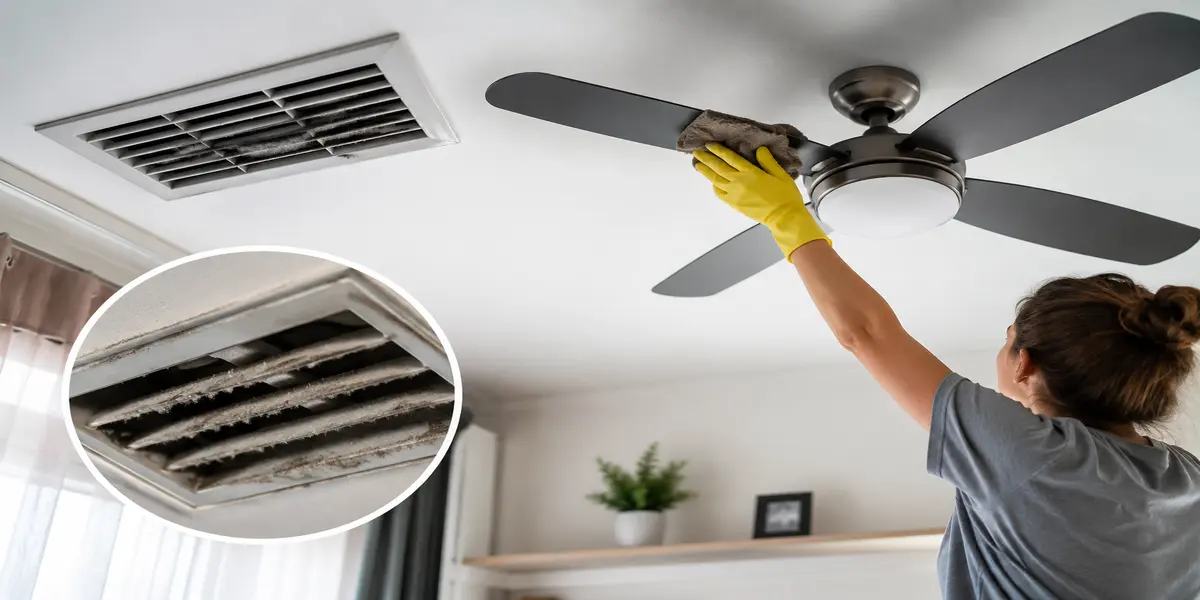
Neglected Zones: Air-Con Vents, Fans & Hidden Dust
Air conditioning vents and ceiling fans are the unknown hearth heroes in homes across Australia working day in and day out to keep our homes comfortable in every season. Yet these essential fixtures are left out of the normal cleaning regimen. Of course dust and debris from the floor, kitchen and bathroom areas will be cleaned up too but the main concern here are those hard-to-reach parts of the house such as air vents, ceiling fan blades and ventilation grilles. Keeping air conditioner vents clean can also help indoor air quality, increase airflow and promote a cleaner home for your family.
In this blog, we explain why air con vents, ceiling fans and other concealed spaces gather so much dust the importance of routine air conditioner vent cleaning, some air vent cleaning tips you can use and simple maintenance tips that help keep Australian homes cleaner and healthier all year round.
Table of Contents
Hidden Dust Builds Quickly
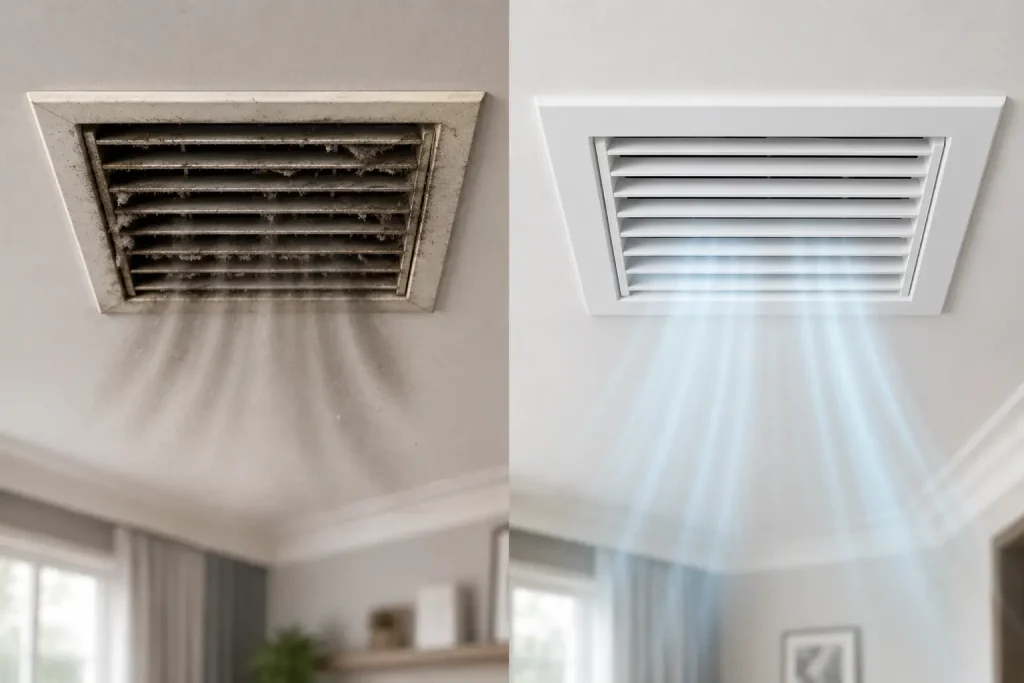
Unseen surfaces of buildings and homes gather dust far more rapidly than most homeowners realize since they are afforded so little routine attention. Airflow through the room is usually hampered as fans’ blades, air-con vents, exhaust grilles, curtain rails, return air ducts and tall book or storage shelves remain undisturbed for a pretty long time. A mixture of pet hair pollen cooking grease and tiny clothing and furniture fibers combines with ordinary dirt and makes dust. A good cleaning of your air conditioner vents will also remove small particles and dust that you don’t want to be circulating through your air as that is a source of allergens indoors.
Air Vents Spread Dust
Air-conditioning systems are always circulating air in the house. If the supply vents and return vents get dusty, every operation cycle of the HVAC system can send tiny particles back into your homes. Dust, pollen, pet dander, mould spores and allergens are found around vent covers and duct openings and are often overlooked by general household cleaning. Although air vent cleaning does help keep your visible grilles dust free there is an added benefit regular duct maintenance can enhance the efficiency of your airflow and prevent your air conditioning system from working harder than it needs to.
Ceiling Fans Trap Dirt
Ceiling fans silently gather dust on a daily basis thanks to their lofty position that allows them to be all but overlooked. As blades spin they are charged with static electricity and aided by the airflow to attract airborne particles. Dust will build-up on your furniture, mattresses and kitchen counter-top with every use of the fan and a lot of it will be thrown to floor level. Dirty fan blades can also lower the rate of air circulation to a minimum and make you smell something unpleasant if they are greasy. Adding ceiling fans to your regular air conditioner vent cleaning routine will help get cleaner air flowing and cut down on dust in your whole house.
Neglected Areas Affect Health
Invisible dust has higher allergen levels than one with visible dust. Invisible dust particles carry allergens that may trigger allergies or cause breathing problems such as pollen, dust mites, mould spores, bacteria, pet hair, human hairs and even microscopic fibers. The air conditioning and ceiling fans bring the contaminants with them as they operate. Families with young children, elderly individuals, those with asthma or pets may experience more pronounced effects from bad indoor air quality. When the ventilation system gets cleaned, the air that comes out of it is much cleaner and you and your family have healthier breathing during all four seasons of the year.
Hidden Areas Worth Cleaning
| Hidden Area | Common Build-Up | Recommended Frequency |
| Air-conditioning vents | Dust and allergens | Every 2–3 months |
| Ceiling fans | Dust and grease | Monthly |
| Exhaust vents | Grease and lint | Every 2–3 months |
| Return air grilles | Dust and pet hair | Every 2 months |
| High shelves | Dust | Monthly |
| Curtain rails | Dust and cobwebs | Every 2 months |
Clean Hidden Zones Safely
In any case, if you wish to get rid of dirt and dust from high places, you should go about it the right way only then can you expect that you won’t be harmed or that your property won’t be the victim. First, turn off ceiling fans and air conditioning units as well. The best way is to get a good step ladder instead of using, standing on, furniture or house items. In this way, you’ll have a safer position from which to clean high spots. Moisture could damage the electrical parts so never spray liquid into electrical vents. Steaming effectively removes built-up dirt from the air conditioner vent and does so gently. The steamer is safe for delicate grilles and won’t block the air supply. Including these hard-to-reach areas in your pre-vacate cleaning routine can help ensure that overlooked dust and dirt do not affect the final condition of the property.
Know When Professionals Help
Although the basic cleaning by the homeowner like dusting and mopping the floors are the only needs for the cleaning of these surfaces, ventilation systems may sometimes require the help of a professionally trained person to ensure proper cleaning. When a vent has mould, excessive dirt accumulation, foul smells, insect nests or water damage only vent cleaning that is done to the letter by a professional will make sure the situation is adequately attended to. Professional cleaners use advanced vacuum tools with high-efficiency filters and other systems which extract harmful materials from the most inaccessible places of a HVAC as well as chemical-free methods are adopted.
Hidden Dust Maintenance Checklist
| Cleaning Task | Frequency | Benefit |
| Dust ceiling fans | Monthly | Improves airflow |
| Wipe vent covers | Every 2–3 months | Removes allergens |
| Vacuum return grilles | Every 2 months | Reduces dust circulation |
| Replace air filters | As recommended | Improves air quality |
| Check for mould | Every season | Prevents health issues |
| Professional vent cleaning | Every 1–2 years | Deep contaminant removal |
Build Better Cleaning Habits
Dust that you can catch in your home is much easier to prevent than dust layers which are very deep. When you are doing the housekeeping do not forget to clean the dusty top areas like windowsills, bookshelves etc. only when you see them dirty but every time. Do not forget that dust which has fallen in the form of fine particles gets lifted into the circulation system and through ductwork. Clean fan blades when dust is heavy and check air vents for cleaning on a seasonal basis. Just a few easy routines along with a regular clean of the air conditioner vents can help Australian homes enjoy clean indoor air all year round.
Conclusion
Unseen dust hiding under air-conditioning ducts, ceiling fans and hard-to-reach corners of the home can be an insidious cause degrading indoor air quality, damaging your home and inconveniencing your family members. Although they do not show themselves to the eyes they definitely are worth keeping in your mind. Besides helping reduce the airborne spread of dust particles which makes it safer for people, dust and allergen removal with frequent cleaning of air vents and ducts is also an important step in the maintenance of the ventilation system. The proper combination of some simple home maintenance together with professional cleaning when necessary enables Australian homeowners to maintain their ventilation systems while at the same time enjoy fresher and cleaner air all year round. Other overlooked areas, such as dirty ovens, can also affect daily household performance, as explained in our guide on how dirty ovens affect cooking performance.
Frequently Asked Questions
1. How often should air conditioner vents be cleaned?
Vent covers should be cleaned on a regular basis with a frequency of every two to three months, however professional cleaning may be required as often as every one to two years.
2. Why do ceiling fans collect so much dust?
Fan blades capture airborne particles by means of the air movement that takes place all the time and static electricity allows the dust to accumulate rapidly.
3. Can dirty air vents affect indoor air quality?
Yes, the air around you can contain particles like dust, pollen, mould spores and pet dander whenever the air conditioning works.
4. Is air vent cleaning necessary if filters are replaced regularly?
Yes, Clean filters help but vent covers and surrounding grilles still collect dust and require routine cleaning.
5. When should professional vent cleaning be considered?
It is advised to use professional cleaning services when you observe the presence of mould, a significant amount of dust, an unpleasant odour, pest infestation or the airflow via your ventilation system has decreased considerably.